
Application engineering
Connect vehicle-part geometry to a credible forming route
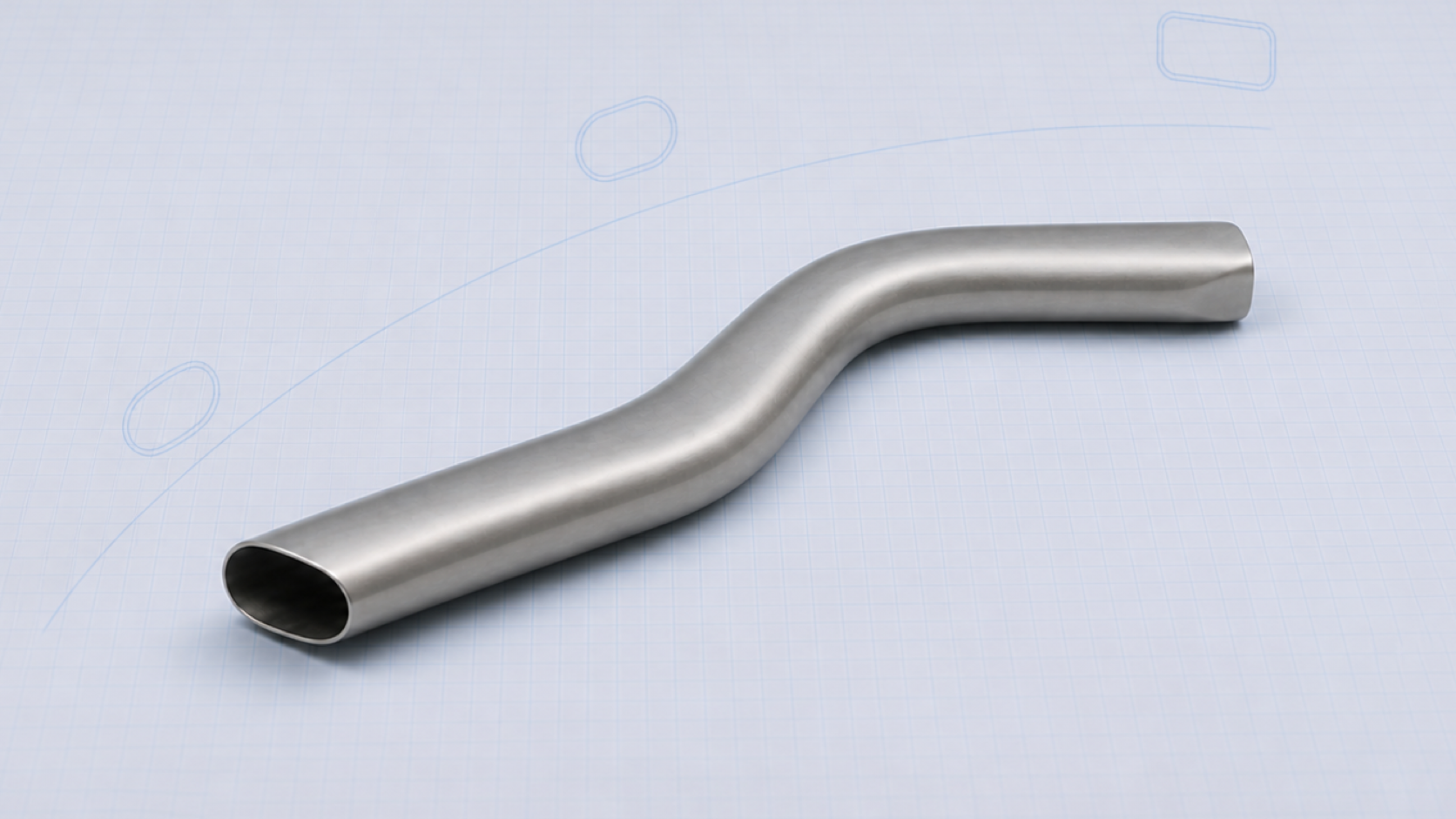
Wall-thickness distribution, section ovality, springback, and seam orientation after bending continue to affect preforming, material delivery, corner filling, and final calibration. The forming route for an automotive tube must follow its actual geometry and interface requirements.
Technical articles
Automotive briefings
Browse the published articles in this topic.
Connected questions
Continue through another decision path
Engineering
Section changes, the tube-end length available for sealing and axial feed, and the assigned stage for holes and trimming all affect the hydroforming route and tooling layout.
Explore this topic →02Materials
Hydroforming behavior depends on the tube actually supplied, not only the grade shown on the drawing. Wall thickness and tolerances, delivery condition, manufacturing route, weld condition, and measured properties all affect material selection and process validation.
Explore this topic →03Process
Wrinkling, thinning, underfilling, and bursting can result from the combined effects of geometry, friction, axial feed, internal pressure, preforming, and incoming tube condition. Defect location, first appearance, and cycle records help separate the main contributing factors.
Explore this topic →Project-specific next step
A real part still needs its own evidence.
General guidance can expose the right questions. Feasibility, scope and validation still depend on the actual drawing, tube, interfaces and delivery requirements.